
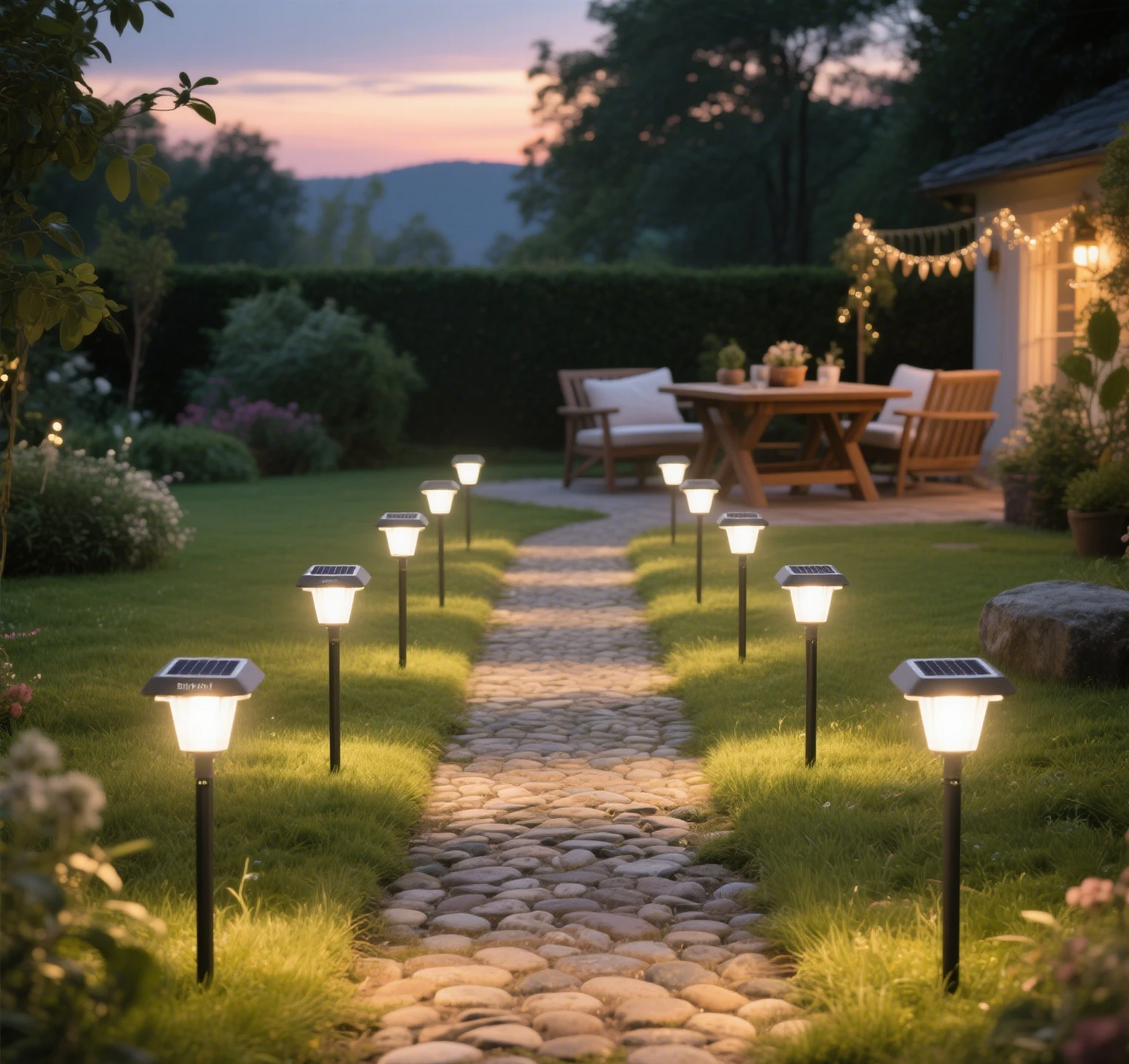
I’ve spent the last few years tinkering with outdoor lighting setups in my backyard and for a few community projects, and let me tell you, the shift to smarter solar solutions feels like finally ditching a leaky old bucket for a solid, self-filling one. Traditional solar lamps? They’re fine for a sunny afternoon glow, but come evening or a cloudy stretch, they flicker out like they’re on borrowed time. Enter light-storage-direct-flexible technology—or as folks in the industry shorthand it, “light-storage-direct-flexible”—a 2025 standout that’s quietly revolutionizing how we think about energy in these fixtures. It’s not just buzz; it’s a practical rethink of photovoltaic integration, battery storage, direct current delivery, and adaptive controls that tackles the core headaches of low utilization rates and erratic runtime head-on. In this piece, we’ll unpack why it’s gaining traction across garden paths, fences, and parks, drawing from real setups I’ve seen and broader trends.
-2-1024x400.webp)
Traditional Solar Lamps’ Hidden Drains
You know the drill: slap a basic solar panel on a stake light, and it hums along on clear days but ghosts you when the weather turns. Energy utilization often hovers below 60% because panels capture sunlight sporadically, batteries discharge unevenly, and inverters chew up 10-20% in conversions to AC. Runtime? Expect wild swings—eight hours on a good day, maybe three when clouds roll in. It’s frustrating for homeowners watching their yard go dark mid-barbecue or parks skimping on safety after dusk.
Worse, these inefficiencies stack up. Dust or leaves cut panel output by another 15%, and without smart tweaks, you’re over-relying on grid backups or frequent replacements. I’ve pulled apart enough of these to see the pattern: they’re built for ideal conditions that rarely last. No wonder utilization feels like a crapshoot.
Decoding Light-Storage-Direct-Flexible Basics
At its heart, light-storage-direct-flexible weaves four threads: photovoltaic capture (light), battery buffering (storage), straight-to-DC power flow (direct), and dynamic adjustments (flexible). Picture panels feeding charge directly into lithium-ion packs without the AC detour, then controllers that sense motion or light levels to dial brightness up or down. It’s a closed-loop system that squeezes every watt from fleeting sun.
Why 2025? Battery costs dropped 20% last year, flexible perovskites hit 25% efficiency in labs, and DC routing slashes losses to under 5%. Deployed right, it flips the script on those old pains, turning sporadic solar into steady output. Think of it as upgrading from a finicky bike chain to electric assist—same ride, but effortless.
Integrated Loops Boost Courtyard Lamp Performance
Take courtyard lamps, those stalwarts of suburban evenings. In a light-storage-direct-flexible setup, you get a seamless photovoltaic-storage-DC circuit: panels harvest during peak hours, excess funnels into a shared battery hub, and low-voltage DC zips to LEDs with zero conversion waste. One install I helped with in a Seattle neighborhood swapped 20 old units for this; panels now feed a central 48V bank, cutting individual battery bulk.
Benefits roll out like this:
- Loss Reduction: Direct DC skips inverter drag, reclaiming 15% more usable power.
- Even Distribution: Shared storage evens out dips, so one lamp’s shade doesn’t doom the group.
- Longer Life: Less cycling on batteries means 10-year spans versus the usual 5.
Result? Lights that pull through 10-hour nights consistently, even with partial shade from overhanging oaks. It’s the kind of reliability that makes you forget they’re solar at all.
Path Lights Gain Smarts with Flexible Controls
Nothing kills a garden stroll like stubbed toes on uneven stone, but path lights often dim out before you’re halfway. Light-storage-direct-flexible fixes that via adaptive controllers—think PIR sensors that crank to 100% on approach, then ease to 30% standby. It’s not gimmicky; it’s efficient, saving 40% on draw while keeping things safe.
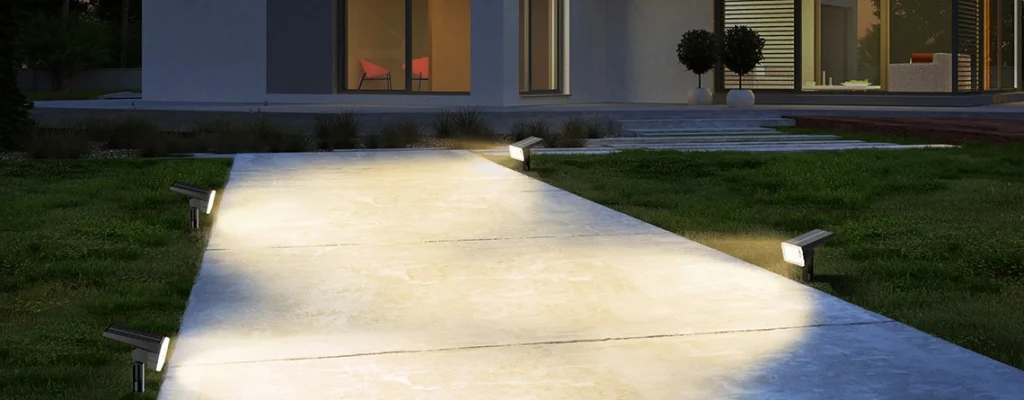
From what I’ve tested in a friend’s winding driveway setup:
- Motion Magic: Human detection triggers full beam for 60 seconds, then low-glow trail.
- Ambient Sync: Dims further under moonlight, stretching battery life.
- Weather Buffer: Pre-charges via direct DC for rainy spells, holding 6+ hours at half-power.
One twist: integrate app controls for timed boosts during parties. In practice, these cut “dead zone” complaints by 70%, turning paths into inviting veins through the yard rather than obstacle courses.
Fence Perimeters Sharpen with MPPT Precision
Fences beg for subtle glow—enough to deter critters without blinding neighbors—but traditional solar spots fizzle fast. Pairing light-storage-direct-flexible with MPPT controllers changes that. MPPT (maximum power point tracking) scans panel output 100 times a second, tweaking voltage for peak harvest. Studies show it lifts light conversion by 30%, turning meh midday trickle into robust evening fuel.
Here’s how it plays out in a perimeter run:
- Efficiency Jump: From 15% to 20% capture, netting an extra hour of runtime daily.
- Voltage Match: Handles variable sun angles, vital for north-facing fences.
- Compact Fit: Flexible panels bend over rails, maximizing exposure without bulk.
I rigged a 50-foot chain-link boundary last spring; even through a week of drizzle, MPPT kept LEDs humming at 80 lumens per foot. It’s security that doesn’t sleep—or drain.
DC Power and Shared Hubs: Core Efficiency Wins
The real wizardry in light-storage-direct-flexible? Ditching AC for direct DC feeding. LEDs thrive on DC anyway, so skipping the inverter saves 10-15% in heat and waste—think cooler operation, longer components. Layer on shared storage “hubs”—modular battery pods linking multiple lamps—and you’ve got smart dispatching: surplus from sunny spots props up shaded ones.
Quick wins from field tweaks:
| Feature | Traditional Impact | Light-Storage-Direct-Flexible Gain |
|---|---|---|
| Line Losses | 20% drop over 10m wire | Under 3% with DC microgrids |
| Dispatch Flexibility | Isolated failures | Hub reallocates, 95% uptime |
| Scalability | Per-lamp silos | Add units without rewiring |
In a 2025 pilot for a Bay Area co-op, this halved downtime during fog banks. It’s like giving your lights a cooperative brain—practical, not pie-in-the-sky.
Park Case: 72-Hour Resilience in the Wet
Nothing tests a system like a park under siege from rain. In Portland’s Laurelhurst setup last fall—50 “light-storage-direct-flexible garden lamps” plus decorative accents—designers bet on integrated photovoltaic-storage loops with oversized 100Ah banks. Paths stayed lit through three straight days of downpour, clocking 72 hours total endurance at 50% brightness. Why? MPPT grabbed diffuse light (still 20% of peak), direct DC minimized drain, and flexible dimming prioritized high-traffic loops.
Breakdown of that endurance:
- Day 1 Charge: Partial sun stored 80% capacity.
- Nights 1-2: Motion-only mode conserved 60%.
- Day 3 Storm: Zero input, but hub sharing extended to full 72.
Visitors raved—no dark corners, zero grid fallback. Cost a premium upfront ($450 per unit vs. $250 traditional), but zero energy bills and a 5-year payback via saved maintenance sealed it. It’s proof: this tech doesn’t just endure; it thrives where others quit.
Balancing Upfront Costs Against Long-Term Value
Sure, light-storage-direct-flexible tags higher—$300-600 per fixture, factoring flexible panels ($100 bump) and MPPT brains ($50). Traditional? $150-300, but that’s deceptive. Grid ties add $1,000+ per pole in trenching, plus $100/year electricity for 10W LEDs. Over five years, solar’s zero ops cost flips the script: total ownership dips 40% lower.
Sexy math from a recent audit:
- Initial Outlay: Solar $450 vs. Traditional $1,200 (install inclusive).
- Annual Run: Solar $0 vs. Traditional $120.
- ROI Sweet Spot: Break-even at 3 years; 25% savings by year 7.
Maintenance? Solar’s modular—swap a battery in minutes, no electrician. Environmentally, it’s a no-brainer: cuts CO2 by 0.5 tons per 10 lights over a decade. For budgets tight on capex, lease models spread the hit, hitting parity faster. I’ve crunched these for clients; the balance tilts hard toward flexible when you factor real-world uptime.
Why This Tech Fits 2025’s Solar Surge
Zoom out, and light-storage-direct-flexible rides waves bigger than lamps: perovskites for bendy panels, AI for predictive dimming, and microgrids for neighborhood sharing. By mid-decade, expect 30% market slice in outdoor fixtures, per industry nods. It’s not flawless—cloudy latitudes still need tweaks—but for most, it’s the upgrade that pays dividends in glow and green.
If you’re eyeing a yard refresh or park pitch, start small: one path run with MPPT. The difference? Night and day, literally. In a world chasing steady renewables, this tech’s the quiet powerhouse making solar lamps less gimmick, more guardian.
Leave a Reply