

In an era where sustainability is paramount, solar garden lights are transforming how households illuminate their outdoor spaces. By shifting from traditional grid-powered lighting to solar-powered lighting, families can reduce their reliance on fossil fuels, lower carbon emissions, and foster eco-friendly outdoor environments. This article explores how solar garden lights contribute to green living, highlighting their environmental benefits, technological advancements, and practical applications. With features like high-efficiency photovoltaic panels, smart technology, and minimal ecological disruption, these lights are a cornerstone of sustainable home design in 2025.

Reducing Grid Dependence with Solar Energy
Powering Homes Sustainably
One of the primary advantages of solar garden lights is their ability to reduce dependence on the electrical grid. Unlike traditional lighting, which relies on grid electricity often generated from fossil fuels, solar-powered lighting harnesses energy from the sun via photovoltaic panels. This shift to renewable energy minimizes the demand for non-renewable resources, aligning with global efforts to combat climate change.
A single solar garden light can save approximately 10–15 kWh of electricity annually, depending on usage and local sunlight conditions. For a household with multiple lights, these savings add up, reducing energy bills and grid strain. To learn more about solar energy solutions, explore how photovoltaic panels are revolutionizing outdoor lighting.
Lowering Carbon Emissions
A Measurable Environmental Impact
Solar garden lights play a significant role in reducing carbon emissions. On average, one solar light prevents approximately 10 kg of CO₂ emissions per year, equivalent to the carbon footprint of burning 4 liters of gasoline. For households with multiple lights, the cumulative impact is substantial, contributing to a lower overall carbon footprint.
By adopting solar-powered lighting, families can actively participate in global decarbonization efforts. Unlike grid-powered lights, which rely on coal or gas in many regions, solar garden lights produce zero emissions during operation. This makes them an ideal choice for environmentally conscious homeowners. Discover more about carbon-neutral lighting and its benefits.
Eco-Friendly Outdoor Design
Minimizing Environmental Disruption
Traditional outdoor lighting often requires extensive wiring, which can disrupt soil, vegetation, and local ecosystems. In contrast, solar garden lights require no cabling, eliminating the need for invasive installation processes. This no-wiring design preserves garden landscapes, protects plant roots, and minimizes soil disturbance, fostering biodiversity.
Additionally, solar garden lights are often made with recyclable materials, further reducing their environmental impact. Manufacturers are increasingly adopting modular designs, allowing components like batteries and LEDs to be replaced without discarding the entire unit. For insights into eco-friendly lighting design, see how solar-powered lighting supports sustainable landscaping.
Advancements in Photovoltaic Technology
High-Efficiency Solar Panels
The performance of solar garden lights hinges on photovoltaic panels, which have seen significant advancements in 2025. Perovskite solar cells, with conversion efficiencies exceeding 30%, outperform traditional silicon panels, especially in low-light conditions. These panels ensure reliable charging even on cloudy days, making solar garden lights viable in diverse climates.
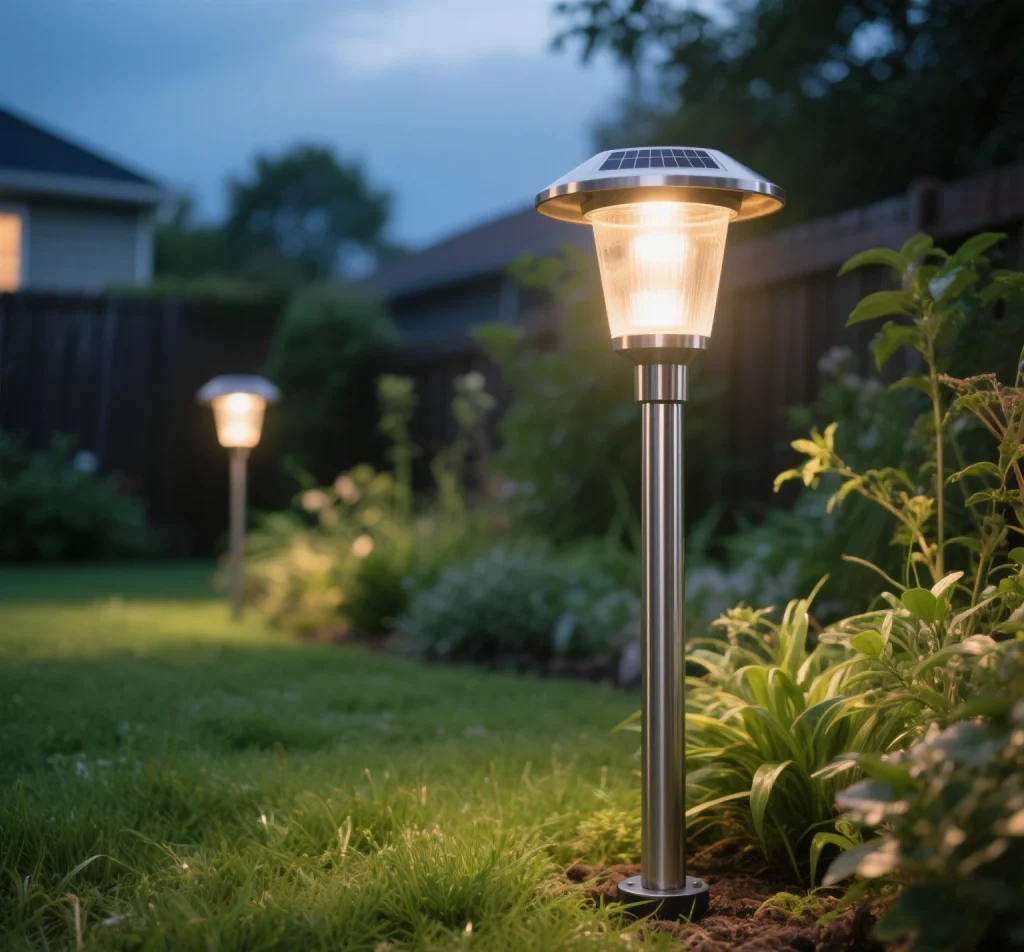
High-efficiency photovoltaic panels also reduce the size of panels needed, allowing for sleeker, more aesthetic designs. This technological leap enhances both functionality and visual appeal, making solar-powered lighting a practical choice for modern homes. Learn about perovskite solar technology and its impact on outdoor lighting.
Smart Features for Enhanced Efficiency
Intelligent Control and Automation
Modern solar garden lights incorporate smart technology, such as human motion sensors, light sensors, and mobile app control, to optimize energy use. Human motion sensors enable lights to switch to high-brightness mode when activity is detected and dim when idle, conserving battery life. Light sensors adjust illumination based on ambient conditions, ensuring efficiency during dusk or dawn.
Mobile app control allows users to schedule lighting, adjust brightness, and monitor battery health remotely. Integration with smart home ecosystems, like Amazon Alexa or Google Home, enables voice control and synchronization with other devices, such as security systems. Explore smart solar lighting solutions for advanced features.
Energy Storage and Battery Innovations
Reliable Power for Continuous Operation
The reliability of solar garden lights depends on efficient energy storage. In 2025, large-capacity batteries, such as lithium-ion or LiFePO4, provide 3–7 days of illumination during low-sunlight periods. Emerging solid-state batteries offer longer lifespans and faster charging, enhancing performance in challenging conditions.
Energy management systems within solar-powered lighting prioritize power allocation, ensuring critical functions like motion detection remain operational. These advancements make solar garden lights a dependable choice for year-round use, even in regions with variable weather. For more on battery technology, see how innovations are powering green homes.
Aesthetic and Functional Versatility
Enhancing Outdoor Spaces
Solar garden lights combine functionality with aesthetic appeal, offering designs that complement modern landscapes. From sleek bollard lights to decorative lanterns, these lights enhance pathways, patios, and gardens. Adjustable color temperatures (3000K warm to 6500K cool) allow users to create cozy or vibrant atmospheres, tailored to specific occasions.
The no-wiring design enables flexible placement, allowing homeowners to illuminate hard-to-reach areas without compromising aesthetics. With IP65+ weatherproof ratings, solar garden lights withstand rain, snow, and dust, ensuring durability. Discover stylish solar lighting for inspiration.
Cost Savings and Long-Term Value
Financial Benefits of Solar Lighting
While the initial cost of solar garden lights may be higher than traditional options, their energy efficiency eliminates electricity costs, offering significant savings. A single light can save $10–$20 annually, with a typical return on investment within 3–5 years. Government incentives for solar-powered lighting further reduce costs in many regions.
The long lifespan of components—photovoltaic panels (10–15 years), LEDs (up to 50,000 hours), and replaceable batteries (3–5 years)—ensures low maintenance costs. For cost-conscious consumers, solar garden lights are a smart investment. Learn about cost-effective solar solutions for budget-friendly options.
Community and Environmental Impact
Driving Broader Sustainability
Beyond individual households, solar garden lights contribute to community-wide sustainability. In urban settings, municipalities are adopting solar-powered lighting for parks and public spaces, reducing municipal energy costs and promoting green initiatives. These installations demonstrate the scalability of solar garden lights for large-scale projects.
By choosing solar garden lights, homeowners inspire others to adopt sustainable lighting, creating a ripple effect. Educational campaigns and community programs further amplify the adoption of solar-powered lighting, fostering a culture of environmental responsibility.
Challenges and Future Outlook
Overcoming Barriers and Embracing Innovation
Despite their benefits, solar garden lights face challenges, such as higher upfront costs and performance limitations in extreme climates. However, declining prices of perovskite solar cells and advancements in battery technology are making these lights more accessible. Innovations like AI-driven energy optimization and wireless power transmission promise to enhance efficiency further.
Looking ahead, solar garden lights will continue to evolve, integrating with smart cities and renewable energy grids. As consumer demand for sustainable lighting grows, manufacturers will prioritize affordability, durability, and cutting-edge features, solidifying the role of solar-powered lighting in green living.
Conclusion
Solar garden lights are more than just outdoor illumination—they are a gateway to sustainable, eco-friendly living. By reducing grid dependence, lowering carbon emissions, and minimizing environmental disruption, these lights empower households to embrace green practices. With advancements in photovoltaic panels, smart technology, and energy storage, solar garden lights offer unmatched efficiency and versatility. As we move toward a greener future in 2025, adopting solar-powered lighting is a practical and impactful step for families committed to sustainability.
Leave a Reply