
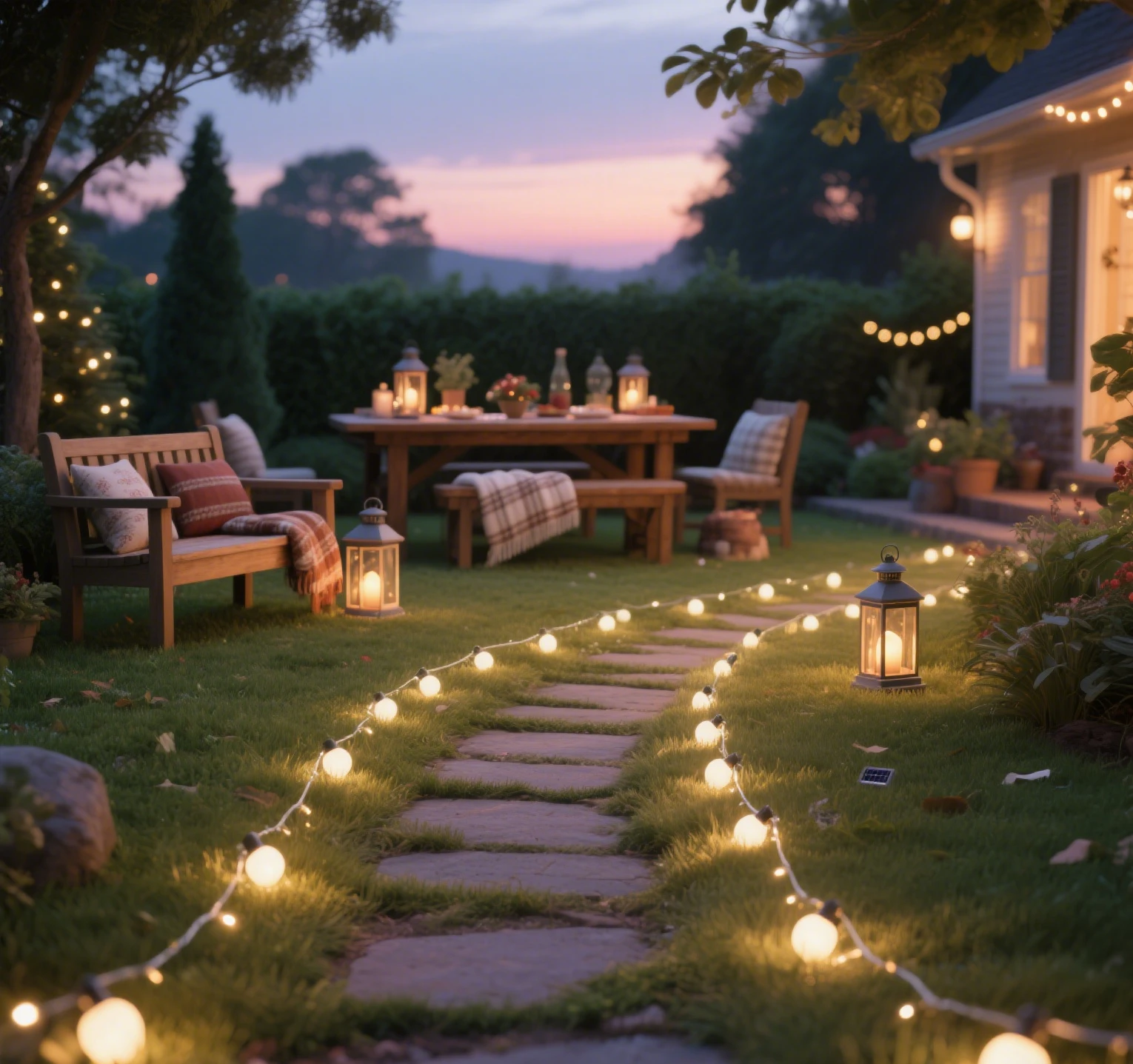
When you arrive home at dusk, a warm glow from your porch automatically lights up, melting away the day’s fatigue. Or, when fumbling for your keys at night, a soft beam illuminates the lock, sparing you the struggle. These moments highlight the dual role of entry lighting: creating an inviting first impression while ensuring night visibility for safety. For North American homes, where porches (typically 3-5ft wide) and front walkways (6-10ft long) define the entry experience, solar-powered lighting offers an eco-friendly, low-maintenance solution. By combining Solar wall lights, Solar string lights, and ground lights, you can craft a welcoming and secure entryway that enhances both entry aesthetics and functionality. This guide provides practical, actionable designs tailored to daily routines (like unlocking the door or greeting guests) and emotional needs (like the comforting glow of home), with specific parameters for easy implementation.
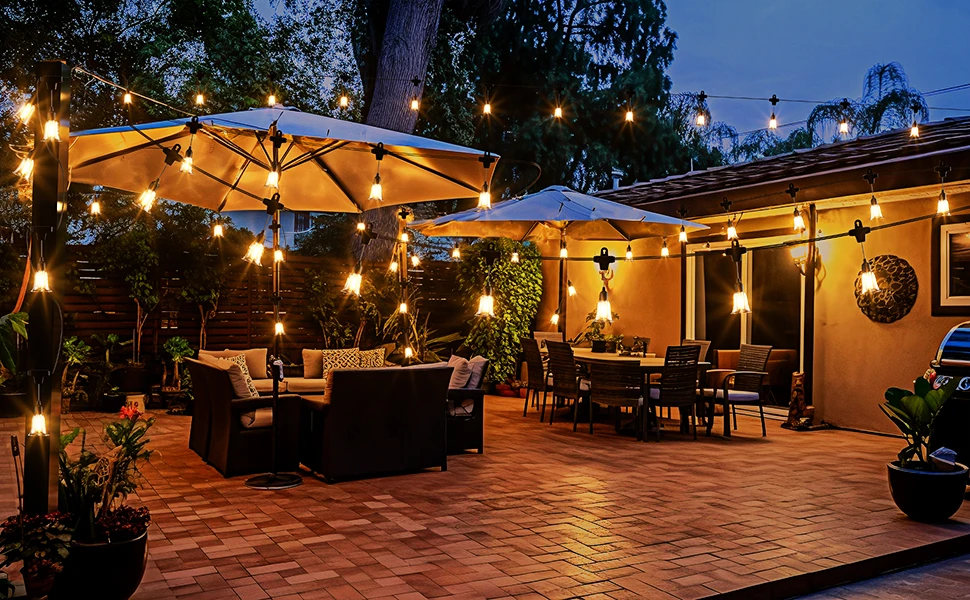
The Power of Entry Lighting: Emotional and Functional Impact
A well-lit entryway does more than illuminate—it sets the tone. Solar wall lights mounted beside the door make finding the lock or doorbell effortless, boosting night visibility. Solar string lights draped along railings or overhead beams add perimeter warmth, transforming a plain porch into a neighborhood standout. Meanwhile, ground lights along the walkway guide guests safely, preventing missteps on steps or slopes. Consider the Smith family, who revamped their dark porch with a trio of solar lights. Guests no longer struggled to find the doorbell, and the warm glow made their home feel like a beacon of comfort. This light layering approach—combining different fixtures for ambiance and utility—is key to a balanced design.
Below, we’ll break down how to use Solar wall lights, Solar string lights, and ground lights to achieve this balance, with specific placement tips, style suggestions for North American homes, and maintenance advice to ensure lasting performance.
1. The Lighting Trio: Roles and Placement
Each type of solar light serves a distinct purpose in light layering, creating a cohesive entryway design. Here’s how to use them effectively:
Solar Wall Lights: The Foundation of Entry Lighting
- Role: Provide focused illumination for key areas like the door lock, doorbell, or house number, ensuring night visibility.
- Placement: Install one or two Solar wall lights on either side of the door at a height of 1.5-1.8m (5-6ft). This height ensures light reaches the ground without blinding passersby.
- Design Tip: Choose fixtures with frosted or diffused covers to soften the beam and avoid harsh glare. For example, a 300-lumen warm white (2700K-3000K) Solar wall light offers ample brightness while maintaining a cozy feel.
- Glare Control: Angle the lights downward 15°-20° to focus on the door area and prevent direct eye contact, enhancing safety and comfort.
Solar String Lights: Adding Perimeter Warmth
- Role: Create ambiance and highlight architectural features, boosting entry aesthetics for a welcoming vibe, especially during holidays or gatherings.
- Placement: Wrap Solar string lights around porch railings (spaced 20-30cm apart) or hang them along the porch ceiling in a zigzag pattern. For a 3-5ft wide porch, 10-15ft of string lights typically suffices.
- Design Tip: Opt for warm white (2700K-3000K) LED Solar string lights to mimic the glow of traditional bulbs. For a festive touch, use globe-style bulbs spaced 25cm apart.
- Example: The Johnsons draped Solar string lights along their porch railing, turning their entryway into a glowing focal point that neighbors admired during evening walks.
Ground Lights: Guiding the Path
- Role: Outline the walkway to guide movement and prevent trips, especially on steps or sloped paths, ensuring night visibility.
- Placement: Install ground lights along both sides of a 6-10ft walkway, spaced 1.2-1.5m (4-5ft) apart. For a 10ft path, 6-8 lights create a clear “light band” effect.
- Design Tip: Choose low-profile, flush-mounted ground lights (50-100 lumens) to avoid obstructing the path. Stainless steel or black finishes blend seamlessly with most landscapes.
- Safety Boost: On stepped or sloped walkways, place ground lights closer (0.8-1m apart) to highlight elevation changes, preventing missteps during rain or snow.
2. Designing the Flow: Walkways and Sightlines
A well-lit entryway guides movement intuitively while keeping the experience pleasant. Here’s how to align lighting with daily routines:
Guiding the Path
- Symmetrical Layout: Place ground lights symmetrically along the walkway’s midline or edges to form a clear “light band.” For a 6ft-wide path, position lights 0.5m from the edge to frame the route.
- Natural Flow: For curved walkways, follow the path’s contour with ground lights to lead guests naturally to the door. This setup helped the Lee family, whose winding 8ft path became a safe, elegant entry after adding 10 ground lights.
- Transition Zones: Ensure Solar wall lights and ground lights overlap at the porch-to-walkway junction, covering a 3m radius to eliminate dark spots.
Avoiding Glare
- Wall Light Angles: As mentioned, tilt Solar wall lights downward 15°-20° to focus light on functional areas (like the lock) without dazzling guests.
- String Light Choices: Use Solar string lights with a warm white tone (2700K-3000K) and moderate brightness (50-100 lumens per bulb) to avoid visual overstimulation. Cool white (4000K+) can feel stark and clinical, detracting from perimeter warmth.
- Testing Tip: Walk the path at night to check for glare or shadows. Adjust light angles or spacing if any areas feel overly bright or dim.
3. Style Pairings for North American Homes
Entry lighting should complement your home’s aesthetic. Below are tailored suggestions for three popular North American styles, ensuring entry aesthetics align with architectural character:
Modern Style
- Solar Wall Lights: Sleek, matte black or brushed silver fixtures with minimalist rectangular shapes. Look for models with built-in diffusers for soft light (e.g., 300 lumens, 3000K).
- Solar String Lights: Thin, LED-based strings with small, cylindrical bulbs for a clean look. Space them 20cm apart for a subtle glow.
- Ground Lights: Low-profile, stainless steel ground lights with flush lenses to maintain a polished, modern vibe.
- Example: A Seattle couple used matte black Solar wall lights and fine LED Solar string lights to make their sleek porch feel both futuristic and inviting.
Rustic/Country Style
- Solar Wall Lights: Wood-accented or bronze-finished fixtures with lantern-inspired designs. Choose warm white (2700K) for a cozy, farmhouse feel.
- Solar String Lights: Retro-style bulbs (e.g., Edison or globe-shaped) wrapped loosely around railings to evoke a countryside glow.
- Ground Lights: Bronze or copper-toned ground lights with textured finishes to blend with natural surroundings.
- Example: A Vermont family paired wood-based Solar wall lights with globe Solar string lights, making their porch feel like a warm retreat.
Industrial Style
- Solar Wall Lights: Iron or galvanized steel fixtures with exposed screws or cage designs. Opt for 400-lumen models for bold illumination.
- Solar String Lights: Bare-bulb or wire-cage Solar string lights for a raw, utilitarian look. Space them 30cm apart for a sparse, edgy aesthetic.
- Ground Lights: Black or gunmetal ground lights with rugged, angular designs to match the industrial vibe.
- Example: A Chicago loft owner used iron Solar wall lights and exposed-bulb Solar string lights to give their entry a gritty yet welcoming charm.
4. Safety and Maintenance: Ensuring Long-Term Performance
A reliable lighting setup requires attention to visibility, durability, and upkeep, especially in North America’s varied climates.
Maximizing Night Visibility
- Coverage: Ensure lights cover the entire entry zone—door, walkway, and sidewalk connection—with a minimum 3m radius of illumination. Test by walking the path at night to confirm no dark patches remain.
- Layering: Combine Solar wall lights (300-400 lumens) for the door, Solar string lights (50-100 lumens per bulb) for ambiance, and ground lights (50-100 lumens) for path guidance. This light layering eliminates blind spots.
- Motion Sensors: Consider Solar wall lights with motion sensors (10-15ft detection range) to activate only when needed, saving energy while maintaining night visibility.
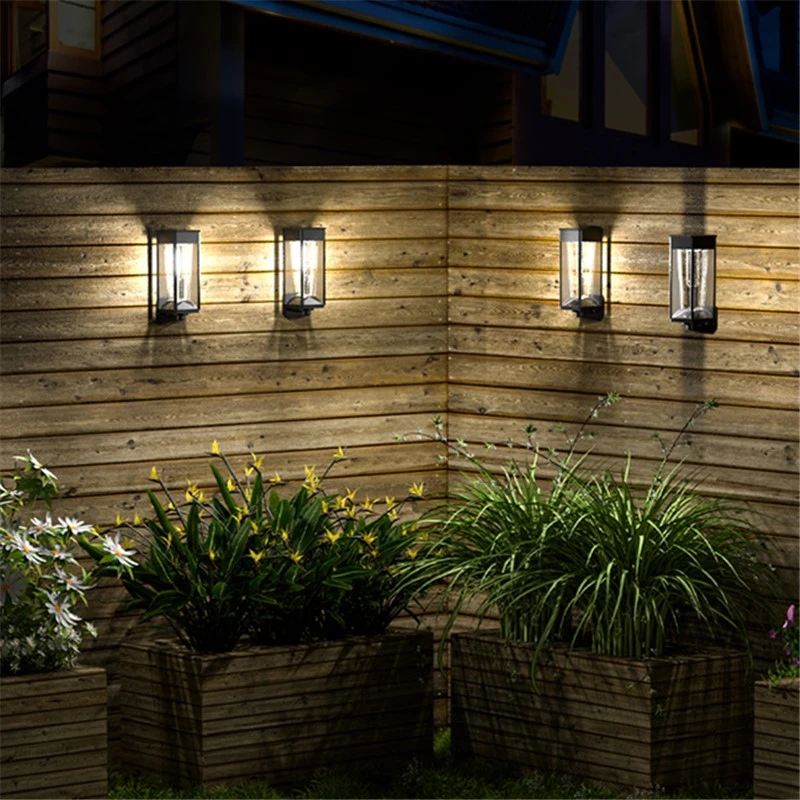
Weatherproofing for Durability
- IP Rating: Choose lights with an IP65 rating or higher to withstand rain, snow, and dust. Solar wall lights need sealed connectors to prevent water seepage, especially in rainy regions like the Pacific Northwest.
- Material Choices: Opt for weatherproof materials like stainless steel, aluminum, or UV-resistant plastic for ground lights and Solar string lights to endure sun exposure and freeze-thaw cycles.
- Example: A Minnesota family switched to IP66-rated Solar wall lights after cheaper models failed during a snowy winter, ensuring consistent performance.
Maintenance Tips
- Solar Panels: Wipe solar panels weekly with a damp cloth to remove dust, leaves, or snow, ensuring maximum charging efficiency.
- Ground Lights: Check monthly for obstructions like grass or debris, which can block light output or solar panels. Trim nearby plants to keep paths clear.
- Battery Checks: Replace rechargeable batteries (typically NiMH) every 1-2 years, depending on usage, to maintain brightness.
Conclusion: The Warmth of a Well-Lit Welcome
A thoughtfully designed entryway is more than a functional space—it’s the first embrace of home. By layering Solar wall lights, Solar string lights, and ground lights, you create a seamless blend of entry aesthetics and night visibility. The warm glow of Solar string lights turns a porch into a neighborhood gem, while Solar wall lights and ground lights ensure safe, confident movement. Whether it’s the relief of finding your keys on a rainy night or the joy of a glowing porch during a holiday gathering, these lights deliver perimeter warmth and practicality. As the Thompsons found after their lighting overhaul, a well-lit entry didn’t just prevent stumbles—it became the heart of their home’s first impression, welcoming them and their guests with open, radiant arms.
Leave a Reply