
In the U.S., where over 65% of households have pets, backyards aren’t just for barbecues—they’re playgrounds for furry friends. Dog runs, cat towers, and sandpits for digging are common, but when the sun sets, these spaces turn tricky. Pets can vanish into the dark, owners struggle to keep tabs, and flimsy lights get chewed to bits. Solar lighting, with its durability and smart features like motion sensors, offers a fix. It’s not about flooding your yard with harsh beams; it’s about creating a safe, pet-friendly glow that keeps tails wagging and owners worry-free. Here’s how to light up your pet’s nighttime zone with solar power that’s tough, practical, and kind to your four-legged pals.

Safety-First Lighting Setup
A well-lit pet zone isn’t just about visibility—it’s about keeping your dog or cat safe while they zoom or lounge. The right solar lights, placed strategically, can make your backyard a nighttime haven. Here’s a layout that works for common pet areas, using durable, chew-resistant designs:
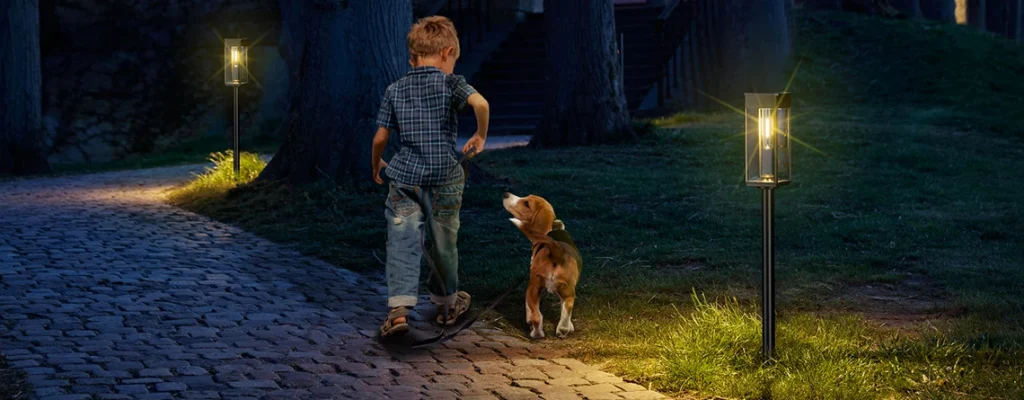
- Dog Run Path Lights: Line the sides of a dog run with low-profile, bite-resistant solar pathway lights (30cm tall, hard ABS plastic). These cast a 50-lumen glow across the track, letting you track your pup’s sprints without tripping hazards. Their low height keeps them out of roughhousing range.
- Cat Tower or Pet Bed Glow: Magnetic solar mini-lights are perfect near cat climbing frames or cozy pet beds. Stick them to metal fences or posts for a soft 20-30 lumen beam that highlights resting spots, so you don’t lose sight of your cat napping in the shadows.
- Boundary Motion Lights: Infrared-sensing solar fence lights at the pet zone’s edges light up (100 lumens) when your pet nears, signaling they’re close to bolting. This doubles as a cue for owners to steer them back, preventing escapes.
A 2025 pet owner’s post on PetPlace raved about pathway lights keeping their hyperactive Lab visible during evening zoomies, cutting down on “where’d he go?” panic. This setup ensures safety without turning your yard into a stadium.
Pet-Friendly Features That Work
Pets aren’t gentle with gear—dogs chew, cats claw, and both leave messes. Solar lights for pet zones need to be tough and practical, with designs that prioritize safety and function. Bitpott’s latest models, for example, nail this balance with features that stand up to furry chaos:
- No Sharp Edges: Rounded, smooth casings (often hard ABS or aluminum) prevent scratches if your pet bumps or nibbles. Think of it as pet-proofing meets lighting.
- IP67 Waterproofing: These lights shrug off rain, sprinklers, and even pet urine, which can corrode lesser models. Tested to withstand submersion, they’re built for muddy paws and wet noses.
- App-Controlled Brightness: Some units sync with phone apps, letting you dial down to 50 lumens for nighttime checks without startling a sleeping pet. Crank to 100 lumens when you need a clearer view.
- Chew-Resistant Builds: Reinforced stakes and housings resist curious teeth, unlike flimsy plastic lights that crack after one chomp.
One Amazon reviewer shared how their IP67-rated path lights survived a puppy’s teething phase, still glowing strong after months. These features aren’t just nice-to-haves—they’re musts for a yard where pets rule.
Why Solar Fits Pet Zones
Solar lighting isn’t just eco-friendly; it’s a natural fit for pet spaces. No wires mean no tripping risks for charging dogs or curious cats. Plus, solar panels sip sunlight during the day, powering up to 12 hours of glow without spiking your bill. Monocrystalline panels, common in top-tier models, pull 22-26% efficiency, charging even on cloudy days. Pair that with 1800mAh batteries, and you’ve got lights that last through long nights.
Here’s why it clicks:
- Wire-Free Safety: No cords for pets to chew or tangle, reducing injury risks.
- Eco-Smart: Zero grid power cuts carbon—think 100 kWh saved yearly per light set.
- Low Maintenance: Auto-on sensors and durable builds mean less fiddling, more playtime.
A Reddit thread from August 2025 highlighted a user’s solar fence lights staying lit through a stormy spring, letting their rescue dog roam safely. It’s hassle-free lighting that keeps the focus on fun.
Placement Tips for Maximum Impact
Getting the most from solar lights in a pet zone means smart placement. You want coverage without blinding your pet or wasting battery. Here’s how to nail it:
- Pathway Spacing: Place low path lights 6-8 feet apart along dog runs for even coverage. Angle slightly outward to avoid glare in your pet’s eyes.
- Rest Area Focus: Stick magnetic mini-lights at pet bed or tower bases, 3-4 feet off the ground, for a soft glow that doesn’t disturb sleep.
- Boundary Markers: Mount motion-sensing fence lights every 10 feet along the perimeter, set to trigger at 3-5 feet to catch wandering pets early.
- Sunlight Check: Ensure panels get 4-6 hours of direct or partial sun. Trim overhanging branches or tilt panels to catch rays under eaves.
A PetPlace user described angling their path lights to light a dog run without dazzling their terrier, making evening playtime safer. Test placements at dusk to tweak for best effect.
Boosting with Extra Lighting
Sometimes, a pet zone needs more than one light type to shine. Layering solar solutions creates a balanced, safe space:
- Spotlights for Open Areas: A 200-lumen solar spotlight can flood a sandpit or play zone, complementing path lights for bigger dogs.
- String Lights for Ambiance: Drape low-lumen strings over fences for soft overhead glow, saving battery while adding charm.
- Wall Lights for Entrances: Motion-activated wall lights near doors guide pets and owners in and out, syncing with boundary sensors.
A 2025 TikTok clip showed a backyard with path lights and a spotlight turning a dog run into a “nighttime agility course,” keeping both pet and owner happy. Mix and match for full coverage without overkill.
Durable Designs for Pet Chaos
Bitpott’s pet-zone lights, for instance, use ABS casings that laugh off bites and bumps, with no jagged edges to nick sensitive paws. IP67 seals keep them ticking through muddy romps or sudden showers. One X post from July 2025 showed a chewed-up light still glowing after a boxer’s tantrum—proof of durability. These builds mean you’re not replacing lights every season, saving cash and hassle.
Eco and Owner Benefits
Beyond pet safety, solar lights are a win for the planet and your wallet. They cut energy use, with one set offsetting 50-100 pounds of CO2 yearly. App controls let you fine-tune brightness, saving battery for cloudy stretches. Owners on forums like PetPlace love the set-it-and-forget-it vibe—auto-sensors handle on/off, so you’re free to toss that ball.
A Brighter, Safer Pet Haven
Solar lighting flips the script on nighttime pet zones, tackling visibility, safety, and durability in one go. Low-profile path lights track your dog’s sprints, magnetic mini-lights keep tabs on cat naps, and motion-sensing fence lights stop escape artists. With pet-friendly designs—no sharp edges, IP67 toughness, app-tunable brightness—these lights handle chaos while keeping things eco-friendly. From frantic zoomies to quiet lounging, your pet’s space stays safe and inviting. Grab a set, tweak the layout, and watch your yard become a nighttime playground where pets and owners both thrive.
Leave a Reply