
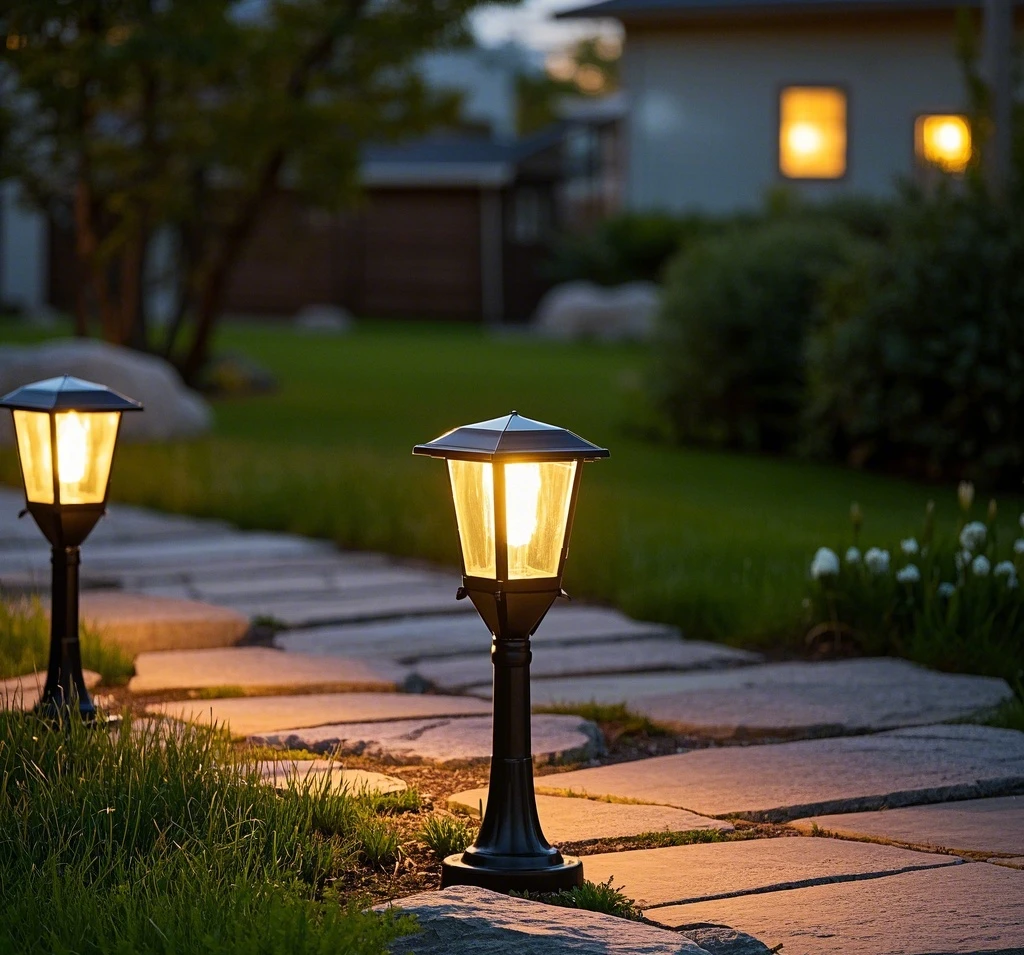
Introduction to Solar Lighting in Landscape Design
For landscape designers, solar yard lights offer a sustainable, versatile tool to elevate both hardscape and softscape elements, creating visually stunning outdoor spaces. By integrating solar landscape lighting, designers can enhance textures, highlight focal points, and craft immersive atmospheres without relying on traditional wiring. This guide provides actionable strategies for using energy-efficient solar lamps to accentuate hardscapes (like stone paths), softscapes (like shrubs), and water features (like ponds). Tailored for landscape designers, it includes a practical pairing formula and a real-world case study with a plan view to inspire your next project. With weather-resistant solar lights, you can achieve eco-friendly, high-impact designs that captivate clients.
Enhancing Hardscape Elements with Solar Lighting
The Role of Hardscapes in Design
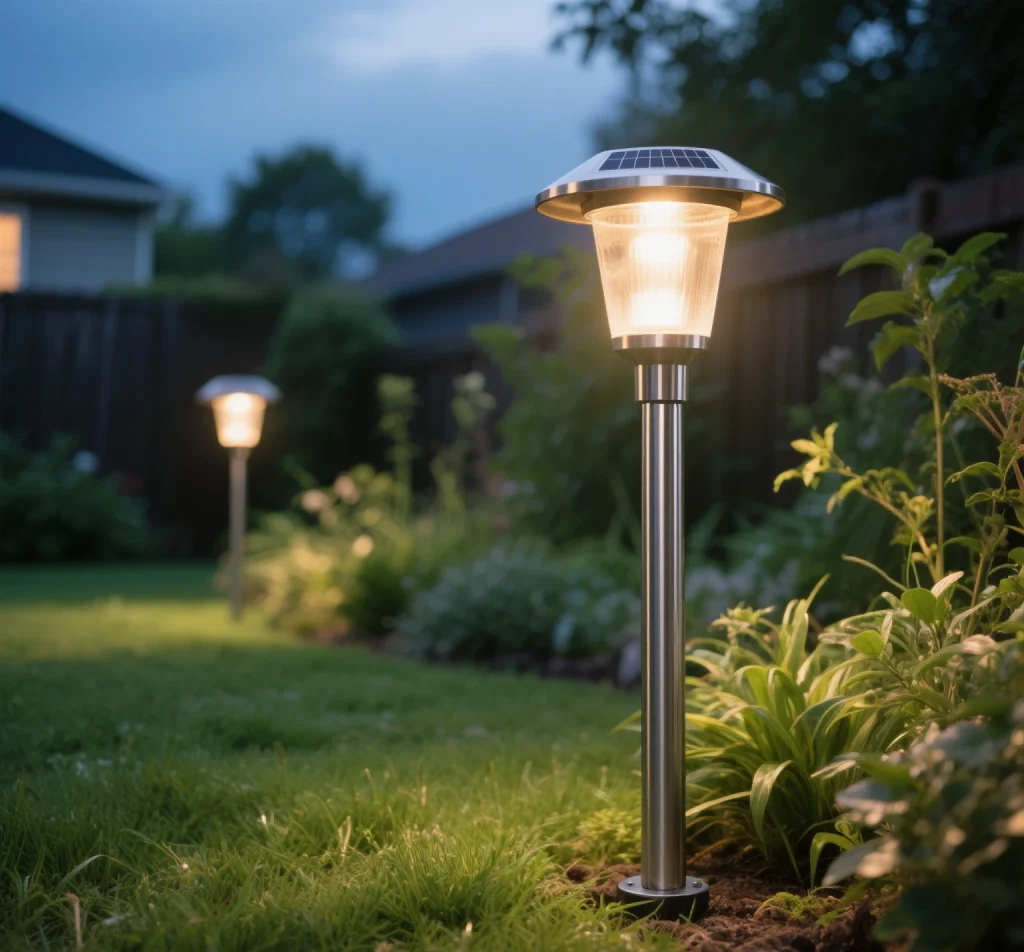
Hardscapes, such as stone paths, patios, or retaining walls, provide structure and durability to landscapes. Solar yard lights can define these elements, emphasizing their textures and boundaries while ensuring functionality. Properly lit hardscapes guide movement, enhance safety, and elevate aesthetic appeal, especially at night.
Lighting Strategies for Hardscapes
- In-ground contour lights: Use recessed solar landscape lighting to outline stone paths or patio edges. These energy-efficient solar lamps create clean lines, making hardscapes pop without overpowering the design. For example, 100-lumen in-ground lights spaced 3–5 feet apart highlight the natural grain of slate or granite.
- Warm white color temperature (2700K–3000K): Warm white LEDs enhance the earthy tones of stone or brick, creating a welcoming ambiance. This color temperature complements materials like sandstone or travertine, accentuating their natural textures.
- Low-profile fixtures: Choose weather-resistant solar lights with flush or low-profile designs to avoid obstructing walkways while maintaining durability against foot traffic or weather.
Recommended Products
The PathGlow In-Ground Solar Light is ideal for hardscapes, offering a 2700K warm white glow and an IP67 waterproof rating. Its flush design ensures seamless integration into stone paths, while the monocrystalline solar panel provides reliable charging for consistent performance.
Highlighting Softscape Elements with Solar Lighting
The Importance of Softscapes
Softscapes, including shrubs, flowers, and trees, add organic beauty and color to landscapes. Solar garden lights can accentuate these elements, highlighting their shapes and textures to create depth and visual interest. Strategic lighting transforms plants into nighttime focal points, enhancing the overall design.
Lighting Strategies for Softscapes
- Low-angle uplighting: Position solar yard lights at low angles to illuminate sculptural plants like holly, crepe myrtle, or ornamental grasses. A 30–45-degree angle highlights foliage texture and form, creating dramatic silhouettes. For example, a 200-lumen energy-efficient solar lamp can spotlight a crepe myrtle’s bark and blooms.
- Cool white color temperature (4000K–5000K): Cool white LEDs enhance the vibrancy of green leaves or colorful petals, making plants stand out. This is ideal for plants like lavender or hostas, where foliage saturation is key.
- Adjustable fixtures: Use solar landscape lighting with adjustable heads to fine-tune light direction, ensuring precise illumination of specific plants without overspill.
Recommended Products
The FloraBeam Solar Uplight is perfect for softscapes, featuring a 4000K cool white LED and a tiltable head for precise aiming. Its weather-resistant solar light design withstands rain and heat, making it suitable for year-round use in garden beds or shrub borders.
Elevating Water Features with Solar Lighting
The Appeal of Water Features
Water features like fountains, ponds, or waterfalls add tranquility and elegance to landscapes. Solar yard lights can enhance their reflective qualities, creating a “starlight on water” effect that captivates viewers. Thoughtful lighting placement amplifies the drama and serenity of water elements.
Lighting Strategies for Water Features
- Submersible solar lights: Place energy-efficient solar lamps underwater to illuminate fountains or pond bases. A 3000K warm white light creates a shimmering effect, mimicking natural moonlight on water surfaces.
- Shoreline ambient lighting: Use solar garden lights along pond edges or near waterfalls to cast soft, reflective glows. Low-lumen (50–100) ambient lights prevent harsh glare while enhancing the water’s sparkle.
- Combination approach: Pair submersible and shoreline solar landscape lighting for a layered effect. For example, a submersible light in a pond’s center combined with shoreline path lights creates a cohesive, immersive scene.
Recommended Products
The AquaStar Submersible Solar Light offers an IP68 rating for underwater use, with a 3000K warm white glow ideal for fountains. Pair it with the ShoreGlow Solar Path Light for shoreline ambiance, ensuring a balanced, reflective water feature design.
Pairing Formula: Landscape Elements, Lighting Types, and Color Temperatures
To streamline design decisions, use this pairing formula to match landscape elements with the ideal solar yard lights and color temperatures:
| Landscape Element | Lighting Type | Color Temperature | Key Benefits |
|---|---|---|---|
| Hardscape (Stone Paths, Patios) | In-ground contour lights | 2700K–3000K (Warm White) | Highlights stone textures, ensures safe navigation |
| Softscape (Shrubs, Flowers) | Low-angle uplighting | 4000K–5000K (Cool White) | Enhances foliage vibrancy, creates dramatic focal points |
| Water Feature (Ponds, Fountains) | Submersible + Shoreline ambient | 2700K–3000K (Warm White) | Mimics moonlight, creates reflective “starlight” effect |
This formula ensures energy-efficient solar lamps enhance each element’s unique characteristics, creating a cohesive and visually striking landscape.
Case Study: Transforming a Residential Landscape
Project Overview
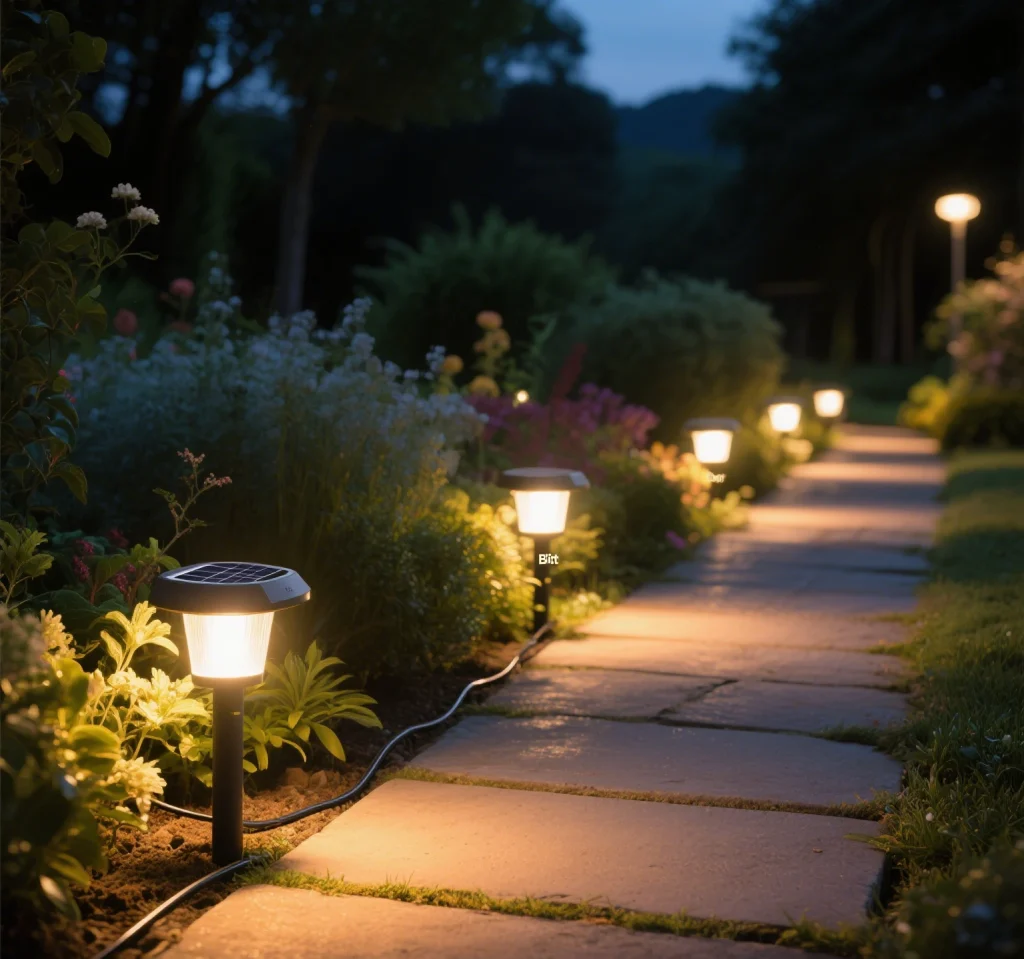
A landscape designer in Austin, Texas, was tasked with revamping a client’s backyard featuring a stone patio, crepe myrtle shrubs, and a small pond. The goal was to use solar landscape lighting to elevate the design while maintaining sustainability.
Design Approach
- Hardscape: The designer installed PathGlow In-Ground Solar Lights (2700K, 100 lumens) along the patio’s edges, highlighting the limestone’s texture and ensuring safe footing.
- Softscape: FloraBeam Solar Uplights (4000K, 200 lumens) were placed at 30-degree angles to spotlight crepe myrtles, emphasizing their vibrant blooms and textured bark.
- Water Feature: AquaStar Submersible Solar Lights (3000K, 150 lumens) were placed in the pond, paired with ShoreGlow Solar Path Lights (3000K, 80 lumens) along the edge, creating a reflective, starlit effect.
Plan View (Simplified Description)
The plan view showed a rectangular patio with in-ground lights every 4 feet along its perimeter, six uplights positioned at the base of crepe myrtles in a curved garden bed, and a central pond with two submersible lights and four shoreline ambient lights. This layout balanced functionality and aesthetics, creating a harmonious nighttime scene.
Outcome
The client praised the design for its eco-friendly elegance, with weather-resistant solar lights ensuring low maintenance. The project won a local design award for its innovative use of solar garden lights, inspiring other designers to adopt similar strategies.
Additional Design Considerations
Installation Tips for Optimal Results
- Sunlight Exposure: Place solar yard lights in areas with at least 6 hours of direct sunlight for maximum charging efficiency. Avoid shaded spots under trees or structures.
- Layered Lighting: Combine ambient, task, and accent solar landscape lighting to create depth. For example, use path lights for safety, uplights for drama, and submersible lights for water features.
- Test Placement: Temporarily position lights to assess their effect before permanent installation, ensuring optimal angles and coverage.
Maintenance for Long-Term Performance
- Clean Panels: Wipe solar panels monthly to remove dust or pollen, especially in softscape-heavy designs, to maintain charging efficiency.
- Battery Checks: Replace lithium-ion batteries every 2–3 years to ensure consistent performance in energy-efficient solar lamps.
- Seasonal Adjustments: Reposition adjustable solar garden lights seasonally to account for changing sun angles or plant growth.
Sustainability and Client Appeal
Using weather-resistant solar lights aligns with eco-conscious design trends, appealing to clients who prioritize sustainability. Highlight the energy savings and reduced carbon footprint of solar yard lights in project proposals to win environmentally minded clients.
Conclusion
Solar landscape lighting empowers landscape designers to transform hardscapes, softscapes, and water features into captivating nighttime displays. By using in-ground contour lights for stone paths, low-angle uplights for shrubs, and submersible lights for ponds, designers can create layered, sustainable designs. Our pairing formula and case study provide a roadmap for integrating energy-efficient solar lamps into your projects, ensuring both aesthetic impact and client satisfaction. Explore our range of solar garden lights to elevate your next landscape design with eco-friendly brilliance.
Leave a Reply