
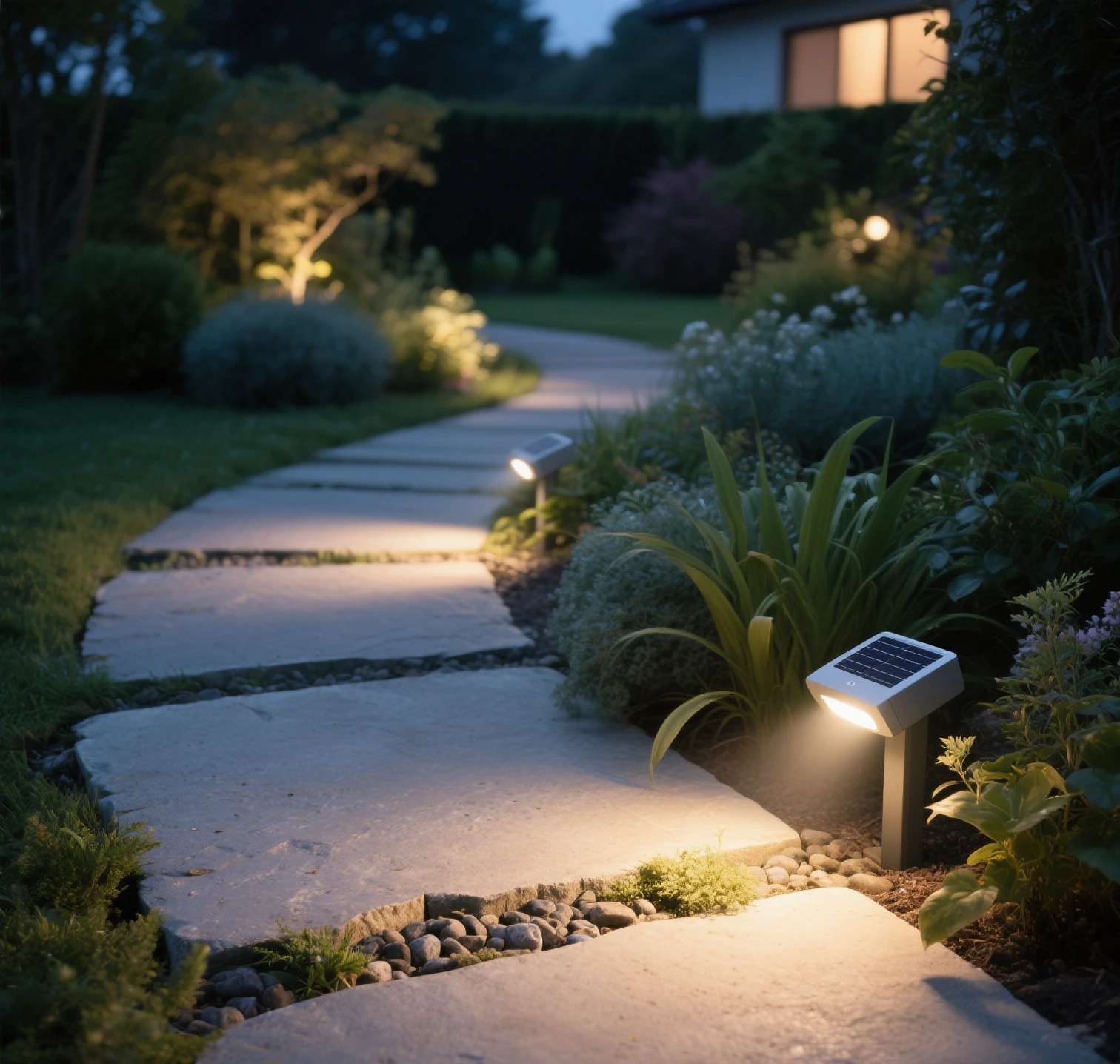
Solar pathway lighting is celebrated for its eco-friendly and cost-effective illumination of gardens, walkways, and driveways. However, skepticism persists, particularly on platforms like Quora, where users question whether solar outdoor lights perform reliably in cloudy areas or regions with indirect sunlight. Concerns often center on battery quality, solar panel efficiency, and overall performance in low light conditions. This article addresses these doubts, explaining how modern solar garden lights function under less-than-ideal sunlight, highlighting user insights, and recommending reliable solar lighting models suited for low light regions. We’ll also provide practical maintenance tips to optimize performance, ensuring your lights shine brightly even on overcast days.
Addressing Quora Skepticism: Do Solar Lights Work in Cloudy Areas?
Quora users frequently express doubts about solar pathway lights in cloudy weather, with comments like, “My solar lights barely work on overcast days; are they even worth it?” or “The battery dies too quickly in winter.” These concerns stem from early solar lights with low-quality components that struggled in indirect sunlight. However, advancements in solar technology have transformed performance, making modern solar LED lights viable even in low light regions like the Pacific Northwest or Northern Europe.
Modern solar outdoor lights use high-efficiency photovoltaic cells to capture diffused sunlight, which penetrates clouds or reflects off surfaces like walls or water. According to Solar Mentors, solar lights can charge in indirect sunlight, though at 10-25% of their maximum capacity compared to direct sunlight. This reduced efficiency doesn’t render them useless; high-quality models with robust battery quality and solar panel efficiency ensure consistent illumination, addressing Quora users’ frustrations.
How Solar Pathway Lights Work in Indirect Sunlight
Solar pathway lighting operates via the photovoltaic effect, where solar panels convert sunlight into electricity, stored in rechargeable batteries for nighttime use. In cloudy areas, diffused sunlight—scattered by clouds or reflected surfaces—still provides enough energy for charging, though at a lower rate. Solareye notes that efficient solar panels, such as monocrystalline panels, excel at capturing indirect sunlight, generating power even on overcast days.
Key components enhance performance in low light conditions:
- High-Efficiency Solar Panels: Monocrystalline panels, with conversion efficiencies above 20%, outperform polycrystalline or thin-film options in cloudy weather. Anti-reflective coatings or bifacial designs, as used in Tongwei’s panels, boost energy capture by 5-10% in indirect sunlight.
- High-Capacity Batteries: Lithium-ion batteries or LiFePO4 batteries store more energy, ensuring lights function for 8-12 hours even after partial charging. Solareye80 ground lights, for example, use high-capacity LiFePO4 batteries to provide 200 hours of illumination from a full charge, ideal for low light regions.
- LED Technology: Solar LED lights consume less power, allowing longer runtime even with limited charge. Their energy efficiency ensures consistent brightness in lumens during cloudy conditions.
- Charge Controllers: These prevent overcharging or over-discharging, optimizing battery lifespan and performance in fluctuating light conditions.
User feedback on Quora highlights that reliable solar lighting models with these features perform well in cloudy areas, countering skepticism about dim or short-lived illumination.
User Insights on Battery Quality and Solar Panel Efficiency
Quora users often cite battery quality as a pain point, with some reporting lights failing within a year due to battery degradation. A user noted, “My cheap solar lights died after one winter; the battery wouldn’t hold a charge.” This reflects issues with low-capacity NiMH batteries (500-600mAh), common in budget models, which degrade after 500-1000 charge cycles. In contrast, LiFePO4 batteries, used in premium models, last 2000-3000 cycles (5-6 years) and perform better in cold cloudy weather.
Solar panel efficiency is another concern. Users complain that panels in shaded or overcast areas fail to charge adequately. However, modern monocrystalline solar panels maintain 10-25% efficiency on cloudy days, as per Renogy, thanks to their ability to capture diffused sunlight. Reddit users recommend cleaning panels regularly to remove dust or snow, boosting solar panel efficiency in low light conditions.
Bitpott’s Solar Pathway Endurance Light, for instance, uses a monocrystalline panel and a 1000mAh LiFePO4 battery, earning praise for reliable performance in cloudy areas. Users report up to 10 hours of bright outdoor illumination even after overcast days, highlighting the importance of quality components.
Reliable Solar Pathway Lighting Models for Low Light Regions
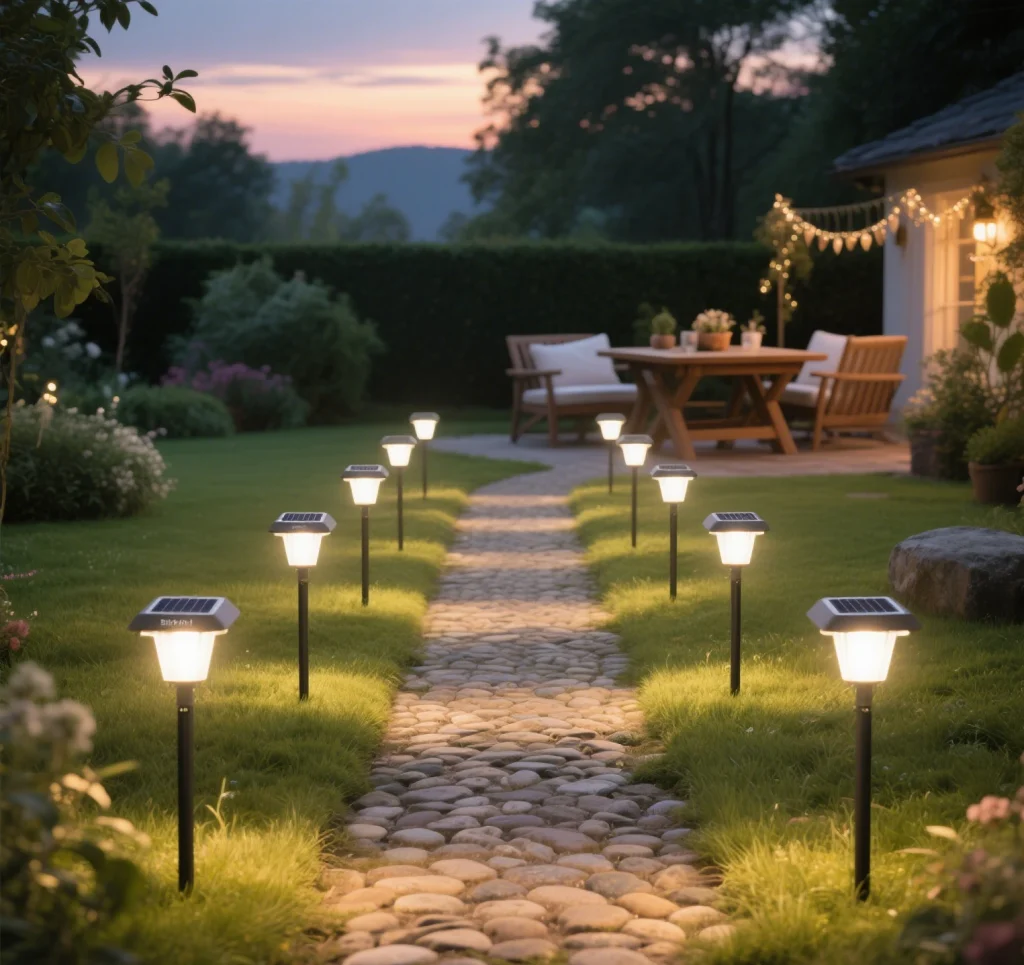
Based on user reviews and expert testing, here are reliable solar lighting models optimized for cloudy areas:
- Bitpott Solar Pathway Endurance Light: Featuring a monocrystalline solar panel with 22% efficiency and a 1000mAh LiFePO4 battery, this light delivers 150 lumens and an IP65 waterproof rating. Users on Quora praise its long-lasting battery and consistent performance in low light regions, with up to 10 hours of runtime after partial charging.
- Alfiot Solar Pathway Lights: Tested by The Spruce, these lights offer an IP65 rating and a 1200mAh lithium-ion battery, providing 12-14 hours of illumination. Their adjustable solar panel angle maximizes diffused sunlight capture, making them ideal for cloudy weather.
- TrueFlame USB Solar Crook Lantern: BBC Gardeners’ World highlights its USB charging option, allowing a full charge in 2-3 hours during cloudy conditions. With an IP65 rating and a replaceable battery, it’s versatile for low light regions, offering 100 lumens and a one-year warranty.
These models address Quora’s concerns by combining high-efficiency solar panels, robust battery quality, and weather-resistant designs, ensuring long-lasting solar lights in challenging conditions.
Maintenance Tips for Optimal Performance in Cloudy Areas
To maximize solar pathway lighting performance in low light conditions, follow these maintenance tips:
- Clean Solar Panels: Remove dust, snow, or debris monthly with a soft cloth to maintain solar panel efficiency. Dirty panels can reduce charging by up to 60%, especially in cloudy areas.
- Optimize Placement: Position lights in areas with maximum indirect sunlight, avoiding shade from trees or buildings. In the Northern Hemisphere, face panels south at a 30-45° tilt to capture diffused sunlight.
- Use High-Capacity Batteries: Replace batteries every 2-3 years with LiFePO4 batteries or high-capacity lithium-ion batteries to ensure longer runtime in low light conditions.
- Leverage Motion Sensors: Motion sensor solar lights conserve energy by activating only when needed, ideal for cloudy weather when battery charge is limited.
- Store in Extreme Weather: In prolonged cloudy conditions or freezing temperatures, bring lights indoors to protect battery lifespan.
These practices, endorsed by Quora and Reddit users, enhance reliable solar lighting performance and address common performance issues.
Unique Strategies for Low Light Regions
Beyond standard maintenance, consider these strategies for low light regions:
- Reflective Surfaces: Place lights near reflective surfaces like white walls or water to boost indirect sunlight capture, increasing solar panel efficiency by 5-10%.
- USB Charging Options: Models like the TrueFlame lantern offer USB charging, allowing a full charge during extended cloudy weather, bypassing solar limitations.
- Bifacial Panels: Emerging solar technology, like Tongwei’s bifacial panels, captures diffused sunlight from both sides, improving performance in cloudy areas.
- Programmable Settings: Lights like Solareye Bollard Light idle at 50% brightness and ramp to 100% with motion detection, conserving battery lifespan in low light conditions.
These innovations make solar pathway lights more viable for regions with frequent cloud cover, addressing Quora’s skepticism about reliability.
User and Expert Insights
Quora users emphasize the importance of high-quality solar lights to overcome cloudy weather challenges. One user noted, “Invest in lights with better batteries and panels; cheap ones fail fast in overcast areas.” Expert tests, like those from BBC Gardeners’ World, confirm that monocrystalline solar panels and LiFePO4 batteries significantly improve performance, with models like Alfiot maintaining brightness for 12+ hours. Common complaints about dimming or short runtime often trace back to low-quality components, reinforcing the need for reliable solar lighting models.
Conclusion
Solar pathway lighting systems can indeed work well in cloudy areas, thanks to advancements in solar panel efficiency, battery quality, and LED technology. Models like Bitpott’s Solar Pathway Endurance Light, Alfiot’s Pathway Lights, and TrueFlame’s USB Solar Crook Lantern prove reliable in low light regions, delivering consistent bright outdoor illumination. By using monocrystalline solar panels, LiFePO4 batteries, and strategic maintenance tips like panel cleaning and optimal placement, homeowners can overcome indirect sunlight challenges. These solutions dispel Quora’s skepticism, offering long-lasting solar lights that enhance garden aesthetics and functionality, even under overcast skies.
Leave a Reply